Key Takeaways
- AI is transforming pain management practice management. Success hinges on selecting tools that integrate seamlessly and yield measurable improvements.
- Automation alleviates administrative burdens and billing errors, allowing providers to concentrate on patient care and precise documentation.
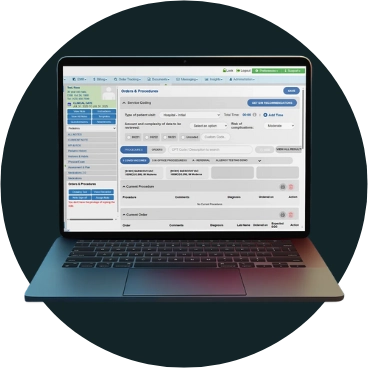
- PainManagement-Cloud’s All In Intelligence represents the next generation of AI in healthcare: intelligent workflows designed by clinicians to eliminate barriers to effective care.
- Discover how All In Intelligence enhances pain management practices.
Artificial intelligence is becoming integral to various fields, and pain management is no exception. From patient intake and medication monitoring to documentation, AI is revolutionizing how pain management specialists handle their workflows.
However, with rapid adoption comes uncertainty. Which tools genuinely assist private practices? How much disruption is acceptable? And what innovations are merely marketing hype?
During a recent webinar, Dr. Michael Dunn, a leading figure in urgent care, shared insights on navigating the evolving AI landscape in healthcare. He emphasized the importance of understanding which technologies deliver real value.
The discussion centered on technologies that provide a tangible return on investment, the pitfalls to avoid, and the necessity of designing workflows that reflect the realities of patient care.
Table of Contents
1. The AI Landscape in Pain Management
AI has reached a pivotal moment in pain management. Many practices have adopted AI tools for clinical documentation, yet not all report significant success.
Many of these systems are designed for larger healthcare settings, not tailored for specialty practices. Some require separate logins or high subscription fees, complicating established workflows rather than simplifying them.
Integrate AI Thoughtfully:
Assess AI solutions based on concrete results—time saved, fewer errors, and measurable efficiency gains. The most effective tools integrate directly into your existing systems. If the benefits aren’t clear during demonstrations, reconsider your options.
2. AI as a Competitive Necessity
AI in pain management is no longer optional; it’s becoming essential. Payers are increasingly using AI to streamline claims processing, shifting the competitive landscape.
Dr. Dunn highlighted that practices utilizing AI for coding, claim preparation, and documentation are experiencing quicker reimbursements and fewer claim denials. Automating pre-visit tasks and ensuring audit-ready documentation helps maintain revenue stability.
Integrate AI Thoughtfully:
Identify your most time-consuming administrative tasks—such as documentation and coding checks—and begin implementing AI solutions in those areas for the quickest and most visible benefits.
3. Effective AI Use Cases
Meaningful advancements in AI for healthcare are emerging from focused, task-specific tools rather than broad, one-size-fits-all platforms.
- Automated Documentation: Streamlines note-taking through secure, real-time transcription, significantly reducing documentation time.
- Intelligent Coding Tools: Suggest codes based on documented care, enhancing accuracy and compliance.
- Patient Monitoring Solutions: Facilitate tracking of patient progress and medication adherence, improving care outcomes.
- Mobile AI Applications: Provide secure access to patient charts and telehealth tools.
- Digital Intake Assistants: Simplify patient registration by guiding them through forms before appointments.
Integration is key; AI that operates within your existing systems enhances efficiency, while external tools can introduce friction.
Integrate AI Thoughtfully:
Choose AI tools that seamlessly fit into your current systems and workflows. The best technology should enhance care delivery, not complicate it.
4. Avoiding AI Pitfalls
- Predictive tools that claim to replace clinical judgment
- Generic solutions not tailored for pain management workflows
- Standalone subscriptions that don’t integrate with your systems
- Broad claims of efficiency without supporting data
Integrate AI Thoughtfully:
Request evidence from vendors. How does this tool specifically improve your workflow? Can they provide outcomes from similar pain management practices? Transparency and proof are essential to distinguish genuine innovation from mere hype.
5. Intelligent AI for Pain Management
From documentation to billing, All In Intelligence streamlines repetitive tasks, reduces clicks, and provides information precisely when needed. Designed by clinicians for clinicians, these tools help restore balance and focus in pain management practices.
Integrate AI Thoughtfully:
Examine your current processes to identify inefficiencies. These are the prime areas for implementing embedded AI, where it can deliver the most significant impact swiftly.
Intentional AI for Enhanced Care
The key takeaway from Dr. Dunn’s insights is that the focus should not be on whether to adopt AI, but on how to do so purposefully.
With All In Intelligence, PainManagement-Cloud is redefining how AI supports healthcare—streamlining tasks, connecting data, and keeping clinicians centered on patient care.